


Ballance Drying Towers: Industrial Asbestos Removal Project Decontamination
Central Demolition was engaged by Ballance Agri-Nutrients to undertake the safe removal of friable asbestos from three industrial drying towers at its Mount Maunganui acid production facility, which was being decommissioned.
The project involved far more than standard asbestos removal. Working inside confined industrial structures where asbestos-contaminated brickwork had also been exposed to residual sulphuric acid required specialist planning, adaptive safety controls, and experienced Class A asbestos removal teams.
Completed over more than three months, the project demonstrates Central Demolition's ability to safely deliver highly complex asbestos removal programmes within operational industrial environments.
Client
Ballance Agri-NutrientsLocation
Mount MaunganuiDuration
3+ monthsClassification
Industrial Class A asbestos removal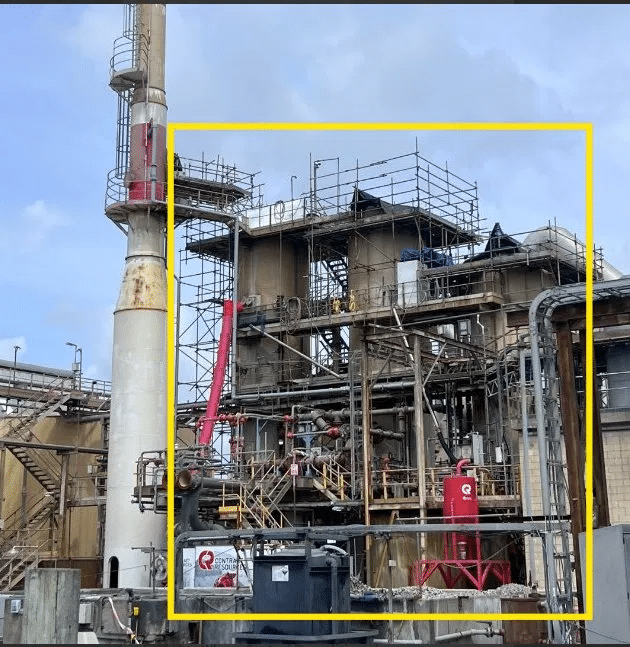
Project Background
Ballance Agri-Nutrients required the safe removal of deteriorating asbestos materials from three drying towers used within its acid production process.
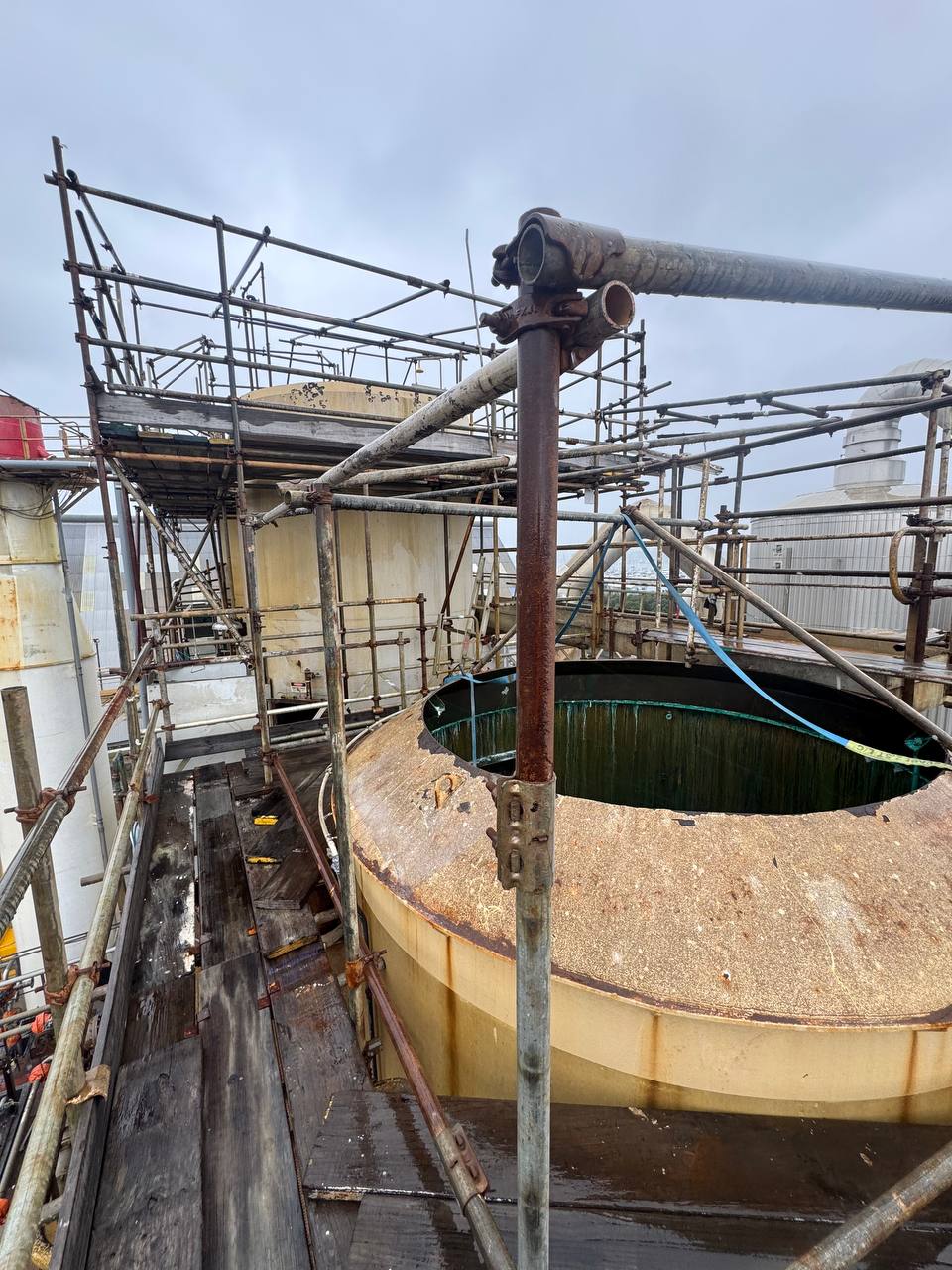
The towers contained friable asbestos brick linings that had become saturated with residual sulphuric acid over many years of operation. This created a highly specialised work environment where asbestos removal had to be carefully managed alongside ongoing chemical hazards.
Every stage of the project was planned to protect personnel, maintain compliance, and minimise disruption to surrounding operations.
Project Challenges
Unlike many asbestos removal projects, this programme involved multiple overlapping hazards that required continual monitoring and adjustment throughout the works.
Key challenges included:
- Class A friable asbestos
- Confined space entry
- Sulphur dioxide (SO₂) gas
- Acid-contaminated asbestos waste
- Large industrial structures
As site conditions evolved, Central Demolition adapted engineering controls and work procedures to maintain safe operating conditions throughout the project.
Scope of Works
Central Demolition managed every stage of the asbestos removal programme, including:
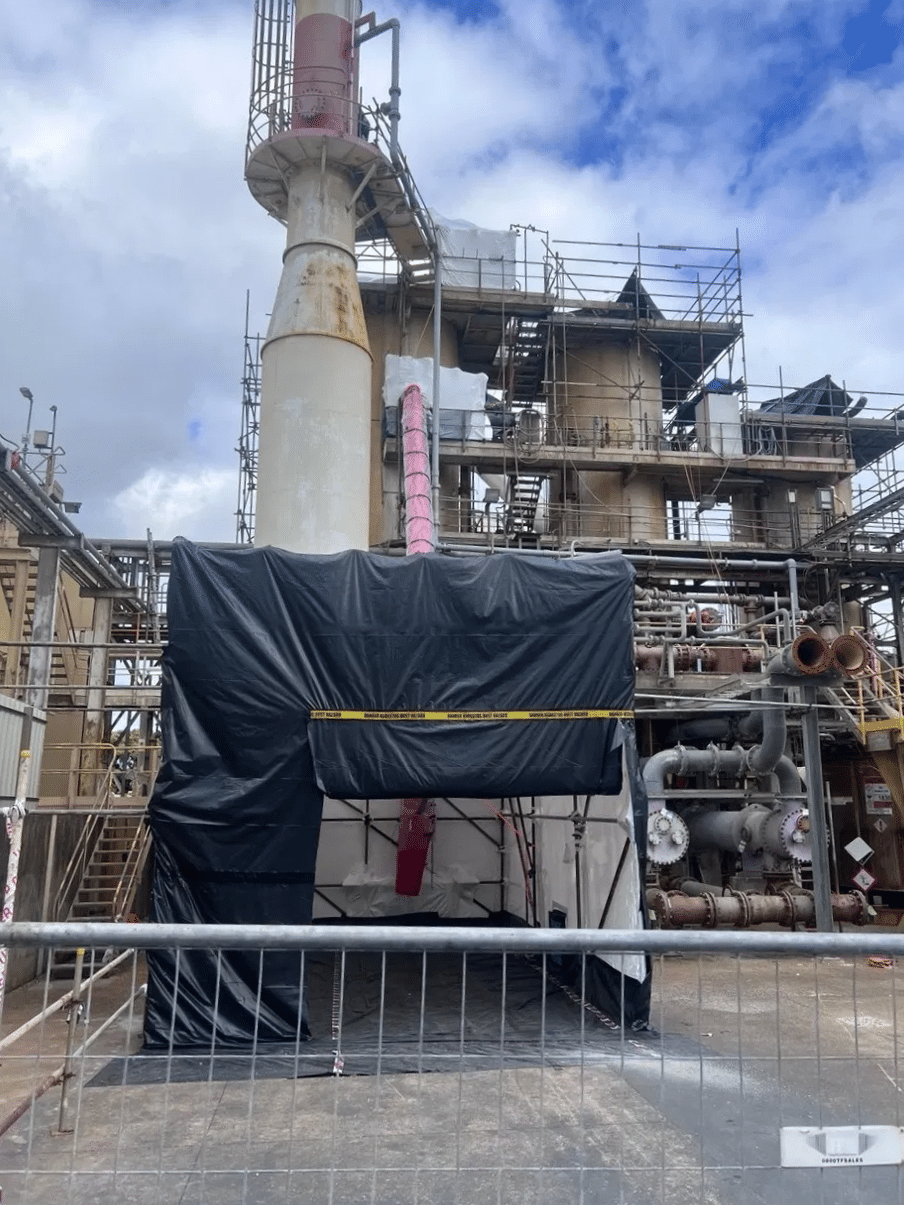
- Construction of full containment enclosures
- Negative pressure ventilation systems
- Class A friable asbestos removal
- Continuous atmospheric monitoring
- Confined space operations
- Acid and asbestos waste management
- Environmental cleaning
- Tower encapsulation
- Independent clearance certification
Managing a Dual-Hazard Environment
One of the defining aspects of this project was the combination of friable asbestos and residual sulphuric acid contamination.
As removal progressed, sulphur dioxide gas levels increased within the drying towers. Central Demolition responded by introducing additional engineering controls, increasing ventilation capacity, and upgrading respiratory protection where required.
This adaptive approach allowed work to continue safely while maintaining compliance with asbestos regulations and confined space requirements.
Safety & Environmental Management
Health and safety remained the highest priority throughout the project.
Comprehensive controls included:
- Continuous atmospheric monitoring
- Negative pressure containment systems
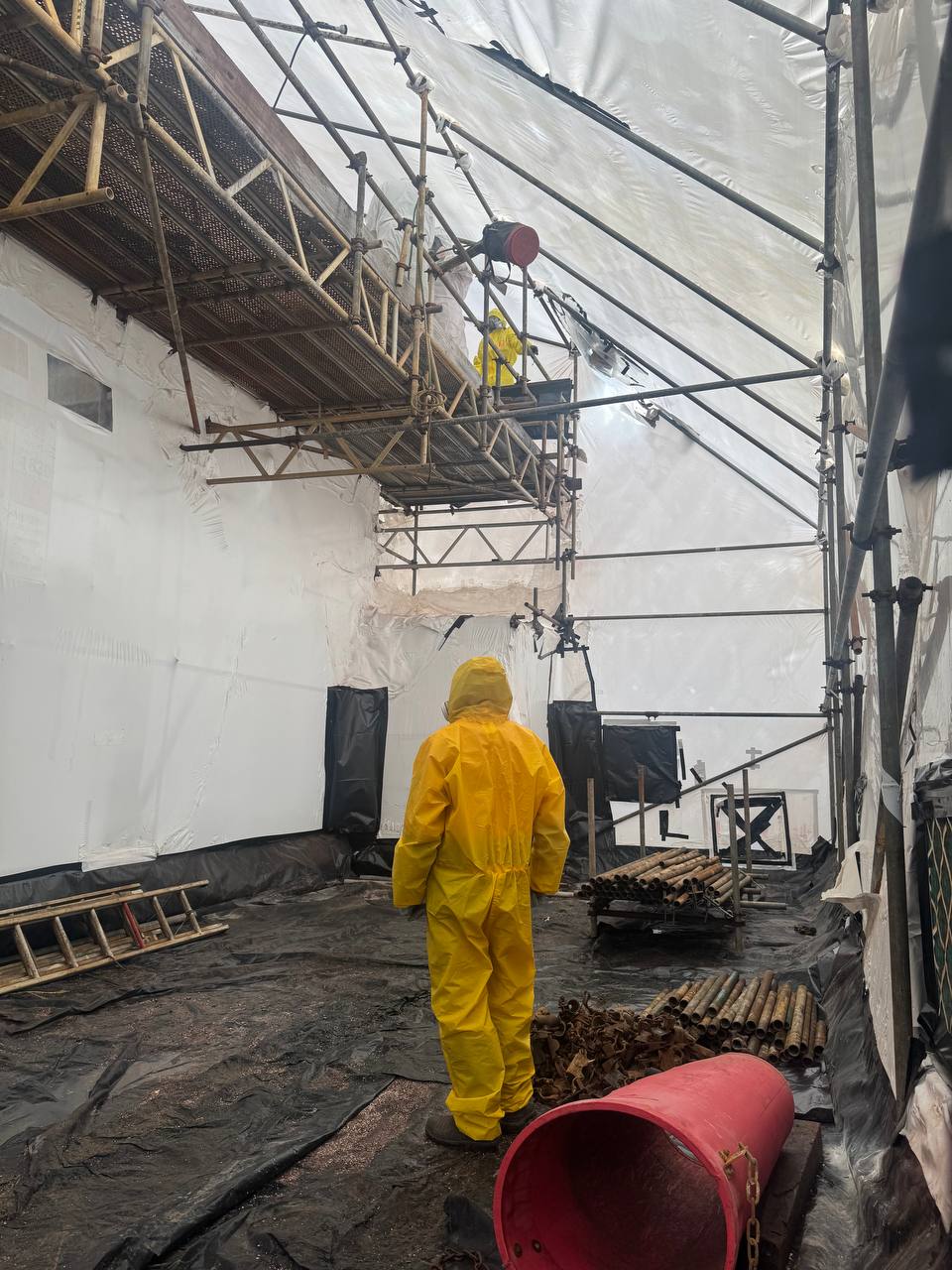
- Three-stage decontamination facilities
- Supplied-air respiratory protection where required
- Daily safety reviews
- Independent asbestos air monitoring
- Strict waste tracking and disposal procedures
The project was completed with zero safety incidents.
Responsible Waste Management
Removing asbestos contaminated with sulphuric acid required a specialised waste management process.
Central Demolition developed an on-site system to safely separate contaminated materials before packaging, transporting, and disposing of waste at approved asbestos disposal facilities.
Complete documentation and traceability were maintained throughout the project to ensure full regulatory compliance.
Project Outcome
The Ballance drying towers project demonstrates Central Demolition's capability to successfully deliver complex industrial asbestos removal projects involving multiple hazards, confined spaces, and challenging operating environments.
By combining detailed planning, experienced personnel, specialised equipment, and adaptive safety management, the project was completed safely while meeting the client's operational and regulatory requirements.
GET A FREE QUOTE
contact us